


Tenzin Topdhen
Abstract
Northeast India, geographically isolated and connected to the mainland by the tenuous Siliguri Corridor, faces a formidable challenge from the deepening strategic nexus between China and Pakistan. This article analyzes the collusive threat posed by this “iron brotherhood,” examining how Beijing and Islamabad coordinate to exploit internal vulnerabilities in India’s Northeast to stretch Indian military resources and undermine regional stability. Drawing upon geopolitical analysis, the paper argues that the conventional approach of managing the border is insufficient. Instead, it posits that the unresolved status of Tibet is the fulcrum of regional instability. The article concludes that actively supporting genuine autonomy or self-determination for Tibet is not merely a moral imperative for India, but a supreme strategic necessity that could act as the ultimate “game changer,” neutralizing the northern threat and dismantling the efficiency of the China-Pakistan axis.
1. Introduction: The Geopolitics of Vulnerability
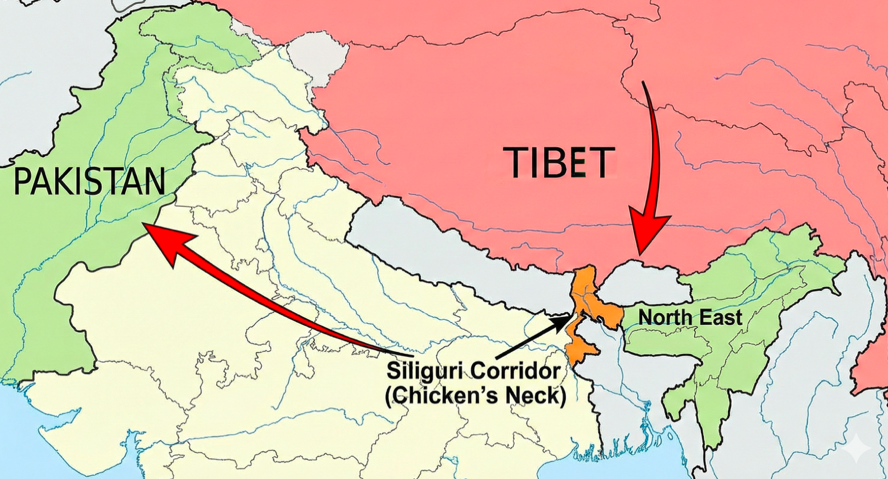
The Northeastern Region (NER) of India is a unique geopolitical entity. Sharing over 4,500 kilometers of international borders with China, Bhutan, Bangladesh, and Myanmar, it is linked to the Indian heartland by the Siliguri Corridor—a narrow strip of land barely 22 kilometers wide at its narrowest point, often referred to as the “Chicken’s Neck.”
For India’s adversaries, this geography presents a significant tactical opportunity. The region has historically battled insurgencies fueled by ethnic fault lines and underdevelopment. However, in recent decades, local grievances have been amplified by external interference. The convergence of strategic interests between the People’s Republic of China (PRC) and the Islamic Republic of Pakistan has created a synchronized threat perception for India, with the NER increasingly becoming a theater for this proxy maneuvering.
While New Delhi has traditionally viewed the threats from its western (Pakistan) and northern (China) borders as distinct, albeit related, the current strategic environment demands viewing them as a cohesive, collaborative front. Central to countering this pincer movement is the often-overlooked factor of Tibet, whose forced annexation by China in the 1950s erased the historical buffer between India and the East Asian behemoth.
2. Anatomy of the China-Pakistan Nexus in the Northeast
The collaboration between China and Pakistan regarding India’s Northeast is not merely a coincidence of interests but a structured aspect of their “All-Weather Strategic Cooperative Partnership.”
2.1 China’s Strategic Drivers
China’s primary objective in the NER is territorial and strategic. It claims nearly the entire state of Arunachal Pradesh as “South Tibet” (Zangnan), a claim it periodically reinforces through “renaming” locations and aggressive patrolling[1]. By keeping the border disputed and unstable, China forces India to commit substantial military resources to the region, diverting attention from Chinese maritime expansion in the Indian Ocean. Furthermore, control over the NER flank secures China’s hold over Tibet and facilitates its Belt and Road Initiative (BRI) ambitions into Southeast Asia.
This strategy is not limited to cartographic aggression but manifests in real-world harassment of Indian citizens, constituting significant diplomatic setbacks for New Delhi. China systematically denies normal visas to residents of Arunachal Pradesh, issuing “stapled visas” instead to imply they are Chinese subjects.

A disturbing recent incident highlights this psychological warfare. According to reports, an Indian woman from Arunachal Pradesh traveling through Shanghai was harassed by Chinese immigration officials. They questioned the legitimacy of her Indian passport, asserting that Arunachal is Chinese territory and implying she should possess Chinese documentation. Such incidents are designed to demoralize the population of the border state and challenge India’s sovereignty at a personal, citizen level [2]. This persistent denial of Indian sovereignty over Arunachal remains a major friction point and a strategic vulnerability.
2.2 Pakistan’s Asymmetric Objectives and Historical Claims
Pakistan’s interest in the NER is an extension of its “bleed India with a thousand cuts” doctrine. This interest is rooted in a historical Pakistani strategic outlook, as evidenced by statements from its former leadershi
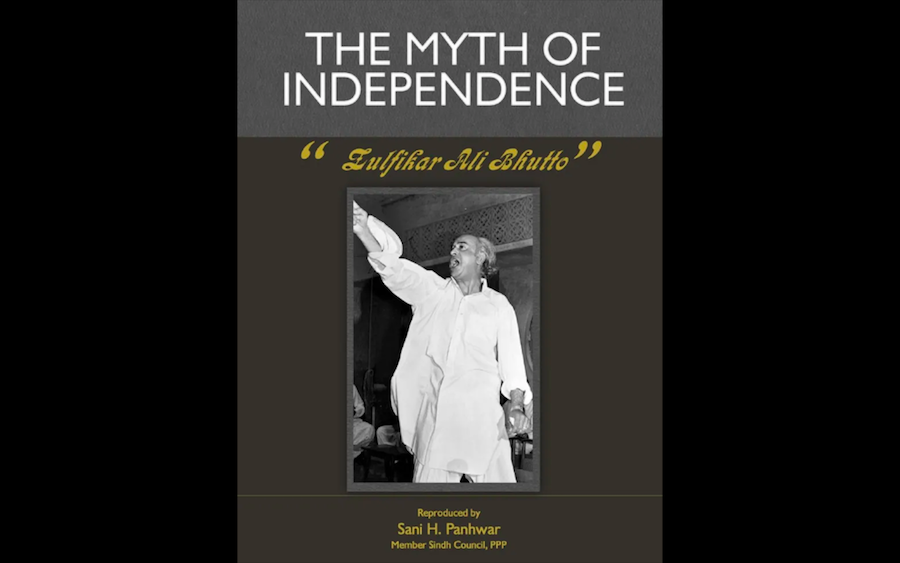
Zulfikar Ali Bhutto, the former Prime Minister of Pakistan, in his book, ‘The Myth of Independence’, laid explicit claims to the region, writing:
“One (of the problems) at least is nearly as important as the Kashmir dispute: that of Assam and some districts of India adjacent to East Pakistan. To these East Pakistan
has very good claims, (…The eviction of Indian Muslims into East Pakistan and the disputed borders of Assam and Tripura should not be forgotten.)”
Bhutto advocated a policy of ‘special relationship with non-Hindu population of Assam until this wrong (of Assam being an integral part of India) can be finally righted’.
This historical aspiration to detach Assam provides the doctrinal underpinning for Pakistan’s Inter-Services Intelligence (ISI) to exploit internal fissures within the region. By supporting insurgent groups with arms, training, and financial aid—often using bases in neighboring countries like Bangladesh (historically) or Myanmar—Pakistan aims to open a second front of instability against India, stretching Indian security forces thin and distracting from the Kashmir theater [3].
2.3 Operational Convergence and Proxies
The nexus becomes operational through intelligence sharing and coordinated diplomatic and military pressure.
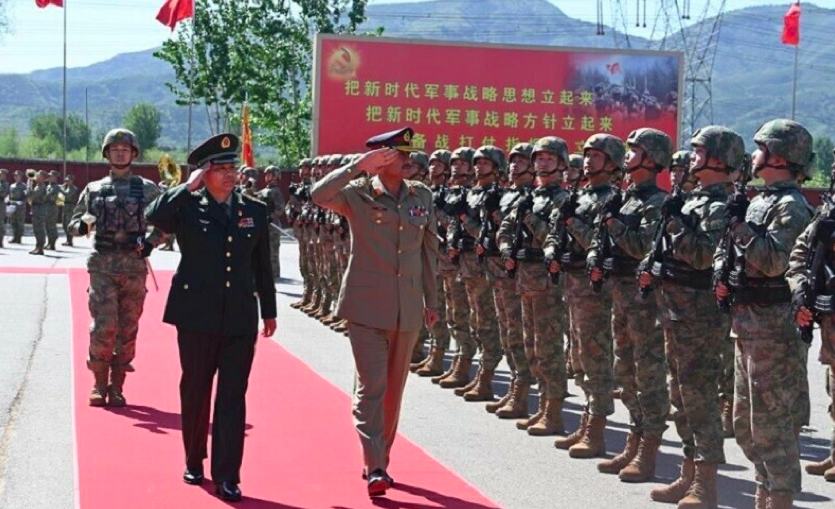
• Military Ties: The high-level military cooperation between the two allies is visible in events such as the visits of Pakistan Army Chiefs to the PLA headquarters.
• Insurgency and Arms Supply: The ISI has been pivotal in creating and sustaining militant groups in the Northeast. Parallel to the Muslim resistance in
Kashmir, other Islamist organisations in Northeast India were also increasingly active in the 1990s. The main militant Islamist resistance groups in Northeast India include:
o Muslim United Liberation Front of Assam (MULFA) o Muslim United Liberation Tigers of Assam (MULTA) o Islamic Liberation Army of Assam (ILAA)
o United Muslim Liberation Front of Assam
o United Reformation Protest of Assam o People’s United Liberation Front
o Muslim Volunteer Force
o Adam Sena Islamic Sevak Sangh
o Harkat-ul-Mujahideen
o Harkat-ul Jihad
Furthermore, the ISI has established reliable supply chains for weapons into the region, particularly after new supply opportunities opened up following the collapse of the Khmer Rouge regime in Cambodia in the 1980s.
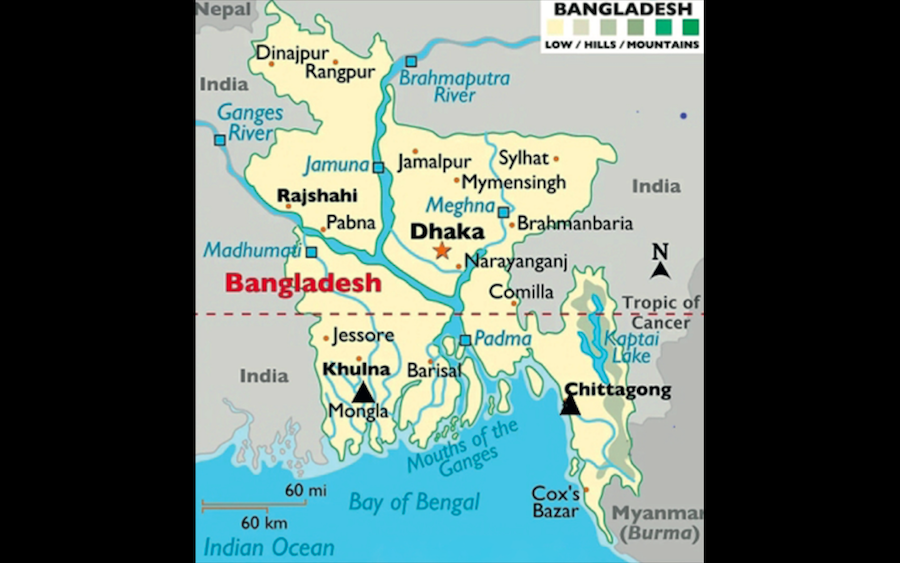
In 1991, the ISI provided weapons from Thailand to a group of 240 NSCN members. Small boats brought the cargo to Cox’s Bazaar, a port in Bangladesh, which became the hub for weapon supplies in the region.
There are credible indications of cooperation between Pakistan’s ISI and China’s Ministry of State Security (MSS) regarding Indian troop movements and internal vulnerabilities[4]. Furthermore, Chinese-manufactured small arms have frequently been recovered from NE insurgent groups, hinting at a supply chain that likely involves tacit approval from Beijing or coordination via Pakistani networks.
3. The Tibet Factor: The Root of the Himalayan Crisis
To understand the threat to Northeast India, one must look beyond the McMahon Line to the Tibetan Plateau. The current geopolitical tension is a direct consequence of China’s occupation of Tibet.
Before the 1950s, Tibet served as a massive, peaceful buffer state between the Indian civilization and China. The borders were largely demilitarized. China’s annexation of Tibet brought the People’s Liberation Army (PLA) directly to India’s doorstep, transforming a peaceful frontier into one of the most militarized zones in the world.
3.1 Militarization of the Plateau
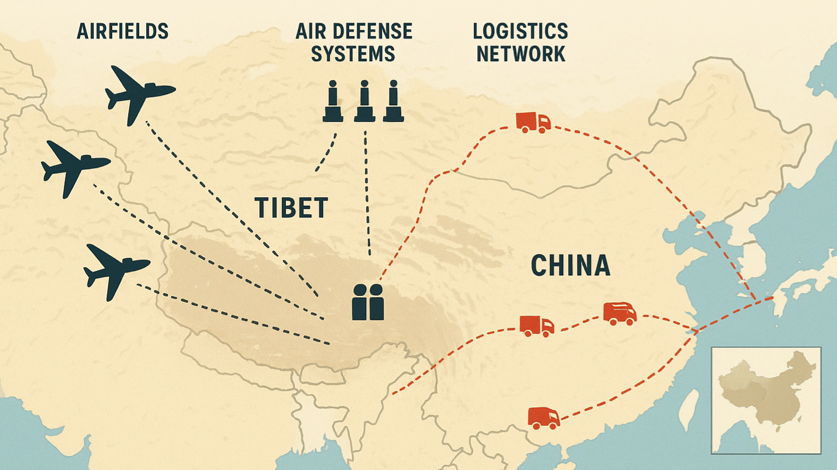
China has developed extensive dual-use infrastructure on the Tibetan plateau, including high-altitude airbases, rail networks extending close to the borders (like the Lhasa-Nyingchi railway near Arunachal Pradesh), and extensive road systems. This infrastructure allows for the rapid mobilization of troops and heavy weaponry towards the Indian border, directly threatening the Siliguri Corridor and Arunachal Pradesh[5].
3.2 Hydro-Hegemony and Water Wars
Perhaps the most critical long-term threat is the weaponization of water. Tibet is the “Water Tower of Asia,” the source of major rivers including the Brahmaputra (Yarlung Tsangpo in Tibet), which is the lifeline of Northeast India and Bangladesh.
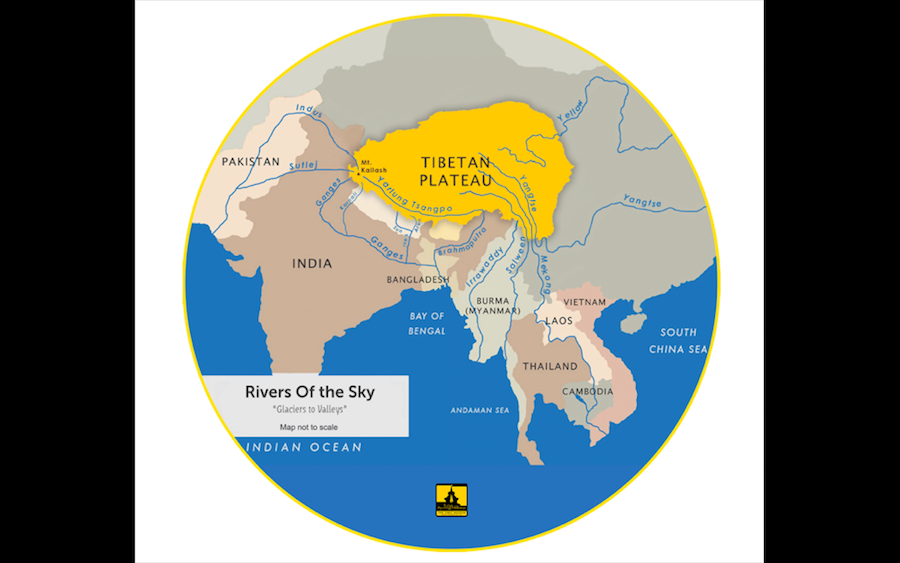
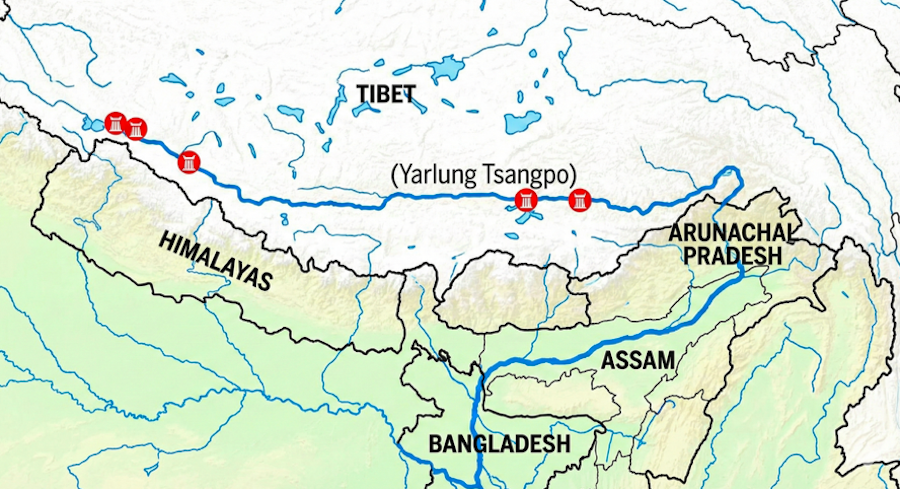
China’s frenetic dam-building program on the upper reaches of the Brahmaputra gives Beijing the ability to manipulate water flow. This creates two distinct threats: the ability to induce drought during lean seasons by withholding water, or to cause devastating flash floods by releasing excess water during monsoon seasons—a strategy already suspected in previous flooding incidents in Arunachal Pradesh and Assam[6].
4. The Strategic Game Changer: Tibet’s Genuine Autonomy
Given the depth of the China-Pakistan collusion, India’s current reactive strategy of border hardening is necessary but insufficient. A paradigm shift is required. The resolution of the Tibet issue—specifically the realization of genuine autonomy or self- determination for the Tibetan people—constitutes the single most effective strategic counter-move available to India.
Restoring Tibet’s status is not just a human rights issue; it is a critical geopolitical necessity for India’s long-term security.
4.1 Restoration of the Historical Buffer
A genuinely autonomous Tibet, governing its own internal affairs and free from the massive PLA presence, would de-escalate the Himalayan frontier. If Tibet were to regain a status similar to its historical neutrality, the immediate military threat to the Siliguri Corridor and Arunachal Pradesh would significantly diminish. The need for India to maintain massive mountain strike corps would decrease, freeing up resources for naval modernization to counter China in the Indian Ocean.
4.2 Securing Ecological and Riparian Rights
Tibetan self-governance is the only viable long-term guarantee for water security in South Asia. A Tibetan administration, culturally imbued with a reverence for nature,
would be far less likely to pursue the aggressive, mega-dam engineering projects currently championed by Beijing. Genuine autonomy would allow Tibet to manage its own resources, ensuring that transboundary river flows are governed by ecological sustenance rather than geopolitical leverage[6].
4.3 Dismantling the Nexus’s Legitimacy
China’s insecurity regarding Tibet is a major driver of its aggressive posture towards India. By actively supporting the Tibetan call for genuine autonomy on the global stage, India shifts the diplomatic pressure onto Beijing. It challenges the legitimacy of China’s presence on India’s borders. Furthermore, if the “Tibet card” is played effectively, China would be forced to redirect significant internal security resources to stabilize the plateau, reducing its capacity for external adventurism in collusion with Pakistan.
5. Policy Recommendations
To counter the China-Pakistan nexus effectively, India must adopt a proactive, multi- pronged strategy that centers on Tibet:
- RevitalizetheTibetPolicy:IndiamustmovebeyondtreatingTibetasamere “card” to be played occasionally. New Delhi should more overtly support the Central Tibetan Administration’s “Middle Way Approach” for genuine autonomy. This involves facilitating greater diplomatic access for Tibetan leadership globally and highlighting the ecological devastation of the Tibetan plateau under Chinese rule in international climate forums.
- StrengthenNortheastResilience:Accelerateinfrastructuredevelopmentinthe NER, particularly border connectivity and digital infrastructure, to reduce the sense of alienation among border populations that adversaries exploit.
- EnhanceCounter-NexusIntelligence:Deepenintelligencecooperationwith friendly nations (like the US, Japan, and Australia) specifically tracking ISI-MSS collaboration and arms trafficking routes into Myanmar and the NER.
- BuildLowerRiparianCoalitions:Indiamusttaketheleadinformingacoalition of lower riparian states (including Bangladesh and Southeast Asian nations affected by the Mekong dams) to present a united diplomatic front against China’s weaponization of transboundary rivers originating in Tibet.
6. Conclusion
The China-Pakistan nexus is a formidable challenge threatening the stability of Northeast India. However, the nexus thrives on the geopolitical anomaly of a militarize
Chinese presence on the Himalayas. The current status quo in Tibet is the root cause of India’s northern vulnerability.
Therefore, the quest for Tibet’s self-determination or genuine autonomy is inextricably linked to India’s national security. A stable, autonomous Tibet is the best bet against the pincer movement of the China-Pakistan axis. By shifting its strategic focus from merely managing the border to addressing the core issue of Tibet’s political status, India can transform the Himalayan geopolitics from a theater of perpetual threat to a zone of stability.
Bibliography & Sources
[1] Chellaney, Brahma. “China’s Salami-Slice Strategy.” Project Syndicate, 25 July 2013. (Discusses China’s incremental territorial claims, including Arunachal Pradesh). [2] Ministry of External Affairs, Government of India. “Official Spokesperson’s response to media queries regarding denial of visas to Indian athletes from Arunachal Pradesh.” September 22, 2023. (Documents the ongoing diplomatic friction regarding China’s denial of Indian sovereignty over Arunachal residents). [3] Raman, B. “The Kaoboys of R&AW: Down Memory Lane.” Lancer Publishers, 2007. (Provides historical context on ISI’s attempts to foment trouble in India’s peripheral regions). [4] Small, Andrew. The China-Pakistan Axis: Asia’s New Geopolitics. Oxford University Press, 2015. (An in- depth analysis of the strategic cooperation between Beijing and Islamabad, including intelligence sharing). [5] “China’s Infrastructure Build-up in Tibet and its Implications for India.” Vivekananda International Foundation (VIF) Task Force Report, 2021. (Details the dual-use infrastructure development on the plateau). [6] Chellaney, Brahma. Water: Asia’s New Battleground. Georgetown University Press, 2011. (A seminal work on hydro- politics in Asia, focusing on China’s upstream control of the Brahmaputra). [7] Central Tibetan Administration. “The Middle-Way Policy.” (Official documents detailing the proposal for genuine autonomy within the framework of the PRC, emphasizing environmental stewardship).
(Views expressed are his own)
The author is the Director of the Tibet Museum under the Central Tibetan Administration.


One Response
Tibetans belief that both good and evil go hand in hand. It must be an Indian belief too because the Indian Buddhist philosopher Chandra Kirti writes: བཀྲ་གཤིས་རྣ་ནག་མ་དང་ལྷན་གཅིག་བཞིན་ (auspiciousness is accompanied by in auspiciousness). India achieved independence on 15th August 1947 from British colonial rule. It was a great occasion to rejoice but as soon as the British left India, the Chinese communists came to power in China and invaded and occupied Tibet. The thread of good neighbourliness between independent Tibet and China was broken as a new breed of ideology imported from Europe took root in China. This breed of violent and ruthless communists exploited the poor and wretched population of China and usurped power by sheer force with the help of Stalin’s Soviet Union. Tibet was bullied to no end just like Taiwan is being bullied today by the same regime. Tibet had no ally to speak of as the historical spiritual partnership (priest-patron relationship) ceased in 1910 and TIBET REASSERTED ITS INDEPENDENCE ON 13th FEBRUARY 1913 by deporting all Manchu officials from Tibet. There were no celebrations like India’s Independence Day but it was a joyous occasion as the 13th Dalai Lama described the collapse of the Manchu empire like a “cloud dissolving in thin air”! As the alien communist forces took over in China, Tibet faced the greatest threat to its independence and sovereignity. The communists were reckless and had no respect for Tibet’s sovereignity and territorial integrity and asked the fourteen year old Panchen to write a letter to the Tibetan people to revolt against the Tibetan Government led by young the Dalai Lama. Nothing would come out of it but then they invaded Amdo and Kham regions and confiscated their livelihood, smashed all the monasteries and reduced them to rubble and plundered their contents. The Tibetan Government appealed to the United Nations and India for help. Unfortunately, Pandit Nehru was gravitated towards the communists. It seems he had a great liking for Bolshevism while Gandhi was revolted by it. It was his anti-colonial attitude that the cunning Chinese played that won him over and he deserted Tibet in order to suck up to communist China! Neither the UN nor India did anything for Tibet and TIBET WAS SWALLOWED BY COMMUNIST CHINA! Nehru was wooed by President John F Kennedy when he visited the US. Kennedy went out of his way to get onto the steps of Nehru’s plane to welcome him to America. Despite such gestures, Nehru remained anti-west and pro-China! So, India had won independence from Britain and was in a celebratory mood but dark clouds hovered over Tibet and the Indo-Tibet border! Pandit Nehru was completely blind sighted by the Chinese communist rhetoric and never imagined that communist China will pose any danger to India. He brushed aside the stern warning by Sarder Patel of the dangers of having communist China as a neighbour and his sympathy for the Tibetan people. Nehru was so sure of his belief that he even thought of doing away with the Indian army since he was more concerned about an army coup d’état as his relationship with General Thimiya, who was the Chief of the army, was at an all time low ebb. As the saying goes, when God wants to punish men, he takes away their brain, that seems to have happened to Pandit Nehru! Owing to the occupation of Tibet, India found itself with a huge challenge on the Indo-Tibet border. This border was an open and porous border where pilgrims, mendicants, yogis and sadhus, yak and mule caravans passed without passport hassles. Other than that there were no military or police out posts to speak of. It was a totally open border with free passage for everybody who were Tibetans or Indians. As soon as the Chinese illegally occupied Tibet, it was under military occupation. Indians couldn’t freely visit Kailash and Lake Mansrover, no Tibetan could travel outside occupied Tibet and it remains so to this day. The Chinese duped Nehru and Nehru was completely unaware of Chinese deception. Despite his effort to admit communist China in the UN which was disputed between Republic of China and the PRC, the ungrateful and shameless Chinese communists invaded India in 1962 when India was totally unprepared because Nehru never imagined in the wildest of his thoughts that the Communist Chinese would return good will with evil. Nehru states: “This menace is not of Assam or Ladakh or of India only, it is a menace for Asia and a menace for the entire world. We see the grassroots of imperialism functioning here across our borders in India. NOW WE SEE THIS SO CALLED ANTI-IMPERIALIST COUNTRY ITSELF BECOMING AN IMPERIALIST OF THE WORST KIND AND COMMITTING AGGRESSION AND INVADING A FRIENDLY COUNTRY WITHOUT RHYME OR REASON”. Ever since the bonhomie of Hindi-China-Bhai Bhai era, the relationship between the two has been blow hot blow cold situation! The Chinese militarist occupied Tibet to the hilt! It is amassing thousands of troops across the Indo-Tibet border for which India was forced to take contingency measures putting some 50,000 troops alone in the Gal-wan valley after the clashes between the two armies. Today, India is facing a very hostile environment of Communist China in the north, Pakistan in the west and now Bangladesh in the east. Nepal has become a communist country with its leaders dancing to the tune of their comrades in China. The only loyal and trustworthy neighbour of India is the Buddhist kingdom of Bhutan. With China and Pakistan acting in tandem as we saw during operation SINDOOR, India has a serious national security problem. In any conflict with China, Pakistan or Bangladesh, the Chinese and Pakistanis will gang up against India. It is hard enough to fight one country but when there are two or even three, it’s an impossible task. India must support Tibetan independence at any cost because the Chinese presence in Tibet is an existential threat to India! The Chinese themselves are fostering narratives and academic discussions promoting the independence of the OKINAWA as a strategic countermeasure to Japan’s support for Taiwan. Why can’t India do the same by supporting Tibetan independence to secure a tranquil Indo-Tibet border as it was in pre-1959 era as well as to counter Chinese malevolent attitude to Indian Kashmir, hand in glove with Pakistan and supporting terrorism in cahoots with Pakistan?