

Tenzin Nyidon
DHARAMSHALA, Aug. 27: Sai, a Myanmar artist and curator who fled Thailand after Chinese authorities forced the removal of Tibetan and other exiled artists’ works from an exhibition in Bangkok, says he does “not feel safe at all” even after relocating to the UK, calling the incident an “unprecedented act of transnational repression.”
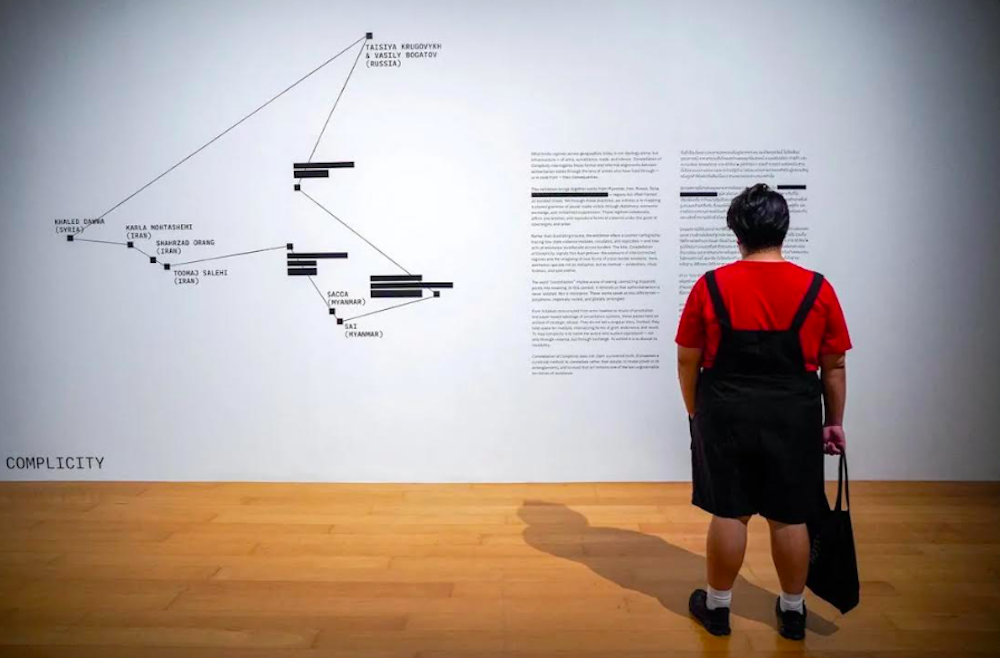
Sai co-curated Constellation of Complicity: Visualising the Global Machinery of Authoritarian Solidarity at the Bangkok Art and Culture Centre (BACC), a 10-artist exhibition exploring state violence, authoritarian alliances, and grassroots resistance. Just days after its opening on 24 July, he said Chinese embassy staff demanded the removal of works by Tibetan, Uyghur, and Hong Kong artists.
On 27 July, three days after the launch, Chinese diplomats, accompanied by Bangkok Metropolitan Administration (BMA) officials visited the exhibition and pressed for its closure. “On the way to our hosts [in the UK], we got phone messages that three diplomats from the Chinese embassy, along with Bangkok Metropolitan Administration officials, had shown up at the BACC,” Sai recalled. “The Chinese diplomats were demanding that the exhibition be shut down. BACC had a discussion with them.”
He said BACC staff later informed him that the embassy wanted the names of Tibetan, Uyghur, and Hong Kong artists erased, warning that China-Thailand relations would be affected if the centre did not comply.
Over the following week, the BACC, acting under instructions from Thailand’s Ministry of Foreign Affairs and the BMA, removed or altered multiple works. These included Tibetan artist Tenzin Mingyur Paldron’s short film Listen to Indigenous People, a Tibetan flag, and other pieces referencing China’s policies in Tibet. Labels were stripped of words such as “Tibet,” “Hong Kong,” and “Uyghur,” and several artists’ names were obscured. Other works flagged as “problematic” included performances by Uyghur artist Mukaddas Mijit and pieces by Hong Kong artists Clara Cheung and Gum Cheng Yee Man. Sai said Chinese diplomats returned repeatedly, allegedly demanding further changes and the removal of additional content critical of Beijing.
China’s Ministry of Foreign Affairs, while not confirming the embassy’s involvement, later accused the exhibition of “distorting” Chinese policies and “undermining China’s core interests.” A spokesperson said the show promoted “fallacies” such as “Tibetan independence” and “Hong Kong independence,” and praised Thailand for taking “timely measures.”
For Sai, the irony was bitter. “An exhibition that exposes the network of authoritarian regimes is itself being attacked by a network of authoritarian regimes, just after 48 hours of opening,” he said. “We do not feel safe at all.”
Sai and his wife, who co-curated the exhibition, fled Thailand on 26 July, boarding a flight to the UK just before midnight after fearing they could be arrested or deported to Myanmar, where he believes the military junta would punish him for his activism. The couple, who had lived in Thailand since 2023, now say they have no future there.
“I’m very sad to not be able to go back to Thailand, which is like a second home for me,” Sai said. “Thailand has long been a refuge for dissidents. This is a chilling signal to all exiled artists and activists in the region.” He added that they fear travelling outside the UK, claiming there is “more than one regime after us.”
Despite the censorship, the controversy has attracted unprecedented attention to the exhibition, with visitor numbers reportedly surging due to online discussion.
Human rights organisations condemned Beijing’s actions. “This intimidation reflects a coordinated effort to suppress artistic expression globally,” said Roberto González of the Human Rights Foundation. “For the Chinese Communist Party to go so far beyond its own borders to censor creative voices shows how much they fear the ability of artists to reveal the truths they seek to conceal.”
Campaign for Uyghurs likewise described the case as further evidence of “Beijing exporting censorship abroad, silencing art and activism that expose its human rights abuses.” Sai, however, vowed to continue his work. He said he is now building a network of artists and activists against global authoritarianism: “Combining all the Davids against the Goliaths.”


